

Email: [email protected]Phone: 800.245.5676
/blog/blade-efficiency-vs-boat-speed-what-really-matters
Blade Efficiency vs Boat Speed: What Really Matters?
May 11, 2026
Share

For decades, rowing innovation has followed a simple principle: increase blade area, reduce slip, and improve performance. From the Smoothie2 to the Fat2 and now the Comp, Concept2 blade design has steadily evolved with the goal of transferring more of a rower’s effort into boat speed.
However, new on-water research published in Sports Biomechanics in early 2026 suggests these assumptions are more nuanced. In a study by Dr. Valery Kleshnev, three Concept2 sculling blades, the Smoothie2, Fat2 and Comp, were tested under real rowing conditions using identical shafts allowing the effects of blade design to be isolated.
What emerged is an important shift in how we think about blade performance. Traditionally, blade efficiency has been associated with reducing slip through the water. By this definition, the Fat2 performed exactly as expected. With the largest surface area, it produced the lowest slippage and the highest propulsive efficiency among the three designs. On paper, that should make it the fastest option. And yet, it wasn’t.
When performance was measured in the terms that matter most to athletes, how much speed is produced for a given amount of effort, the results told a different story. The smaller Comp blade was shown to produce more boat speed per unit of rower power.
This is a subtle but important distinction. Rowing is not just about how much water the blade “holds”; it’s about how efficiently energy flows from athlete to boat. The study suggests that larger blades, while reducing slip, may also introduce additional losses through factors like rotational resistance and axial motion in the water. According to the study, smaller blades appear to reduce some of these hidden inefficiencies, allowing more of the athlete’s effort to translate into forward speed.
Interestingly, the athlete in the study maintained almost identical stroke mechanics across all three blade types. Stroke length, force profiles, and overall power output varied by less than a few percent, meaning the differences observed came down to how each blade interacted with the water rather than changes in technique.
At the same time, the subjective feel of the blades did vary. The Fat2, with its larger surface area, highlighted the increased technical demand associated with handling a bigger blade. By comparison, smaller blades like the Comp may feel lighter and more manageable, especially at higher stroke rates.
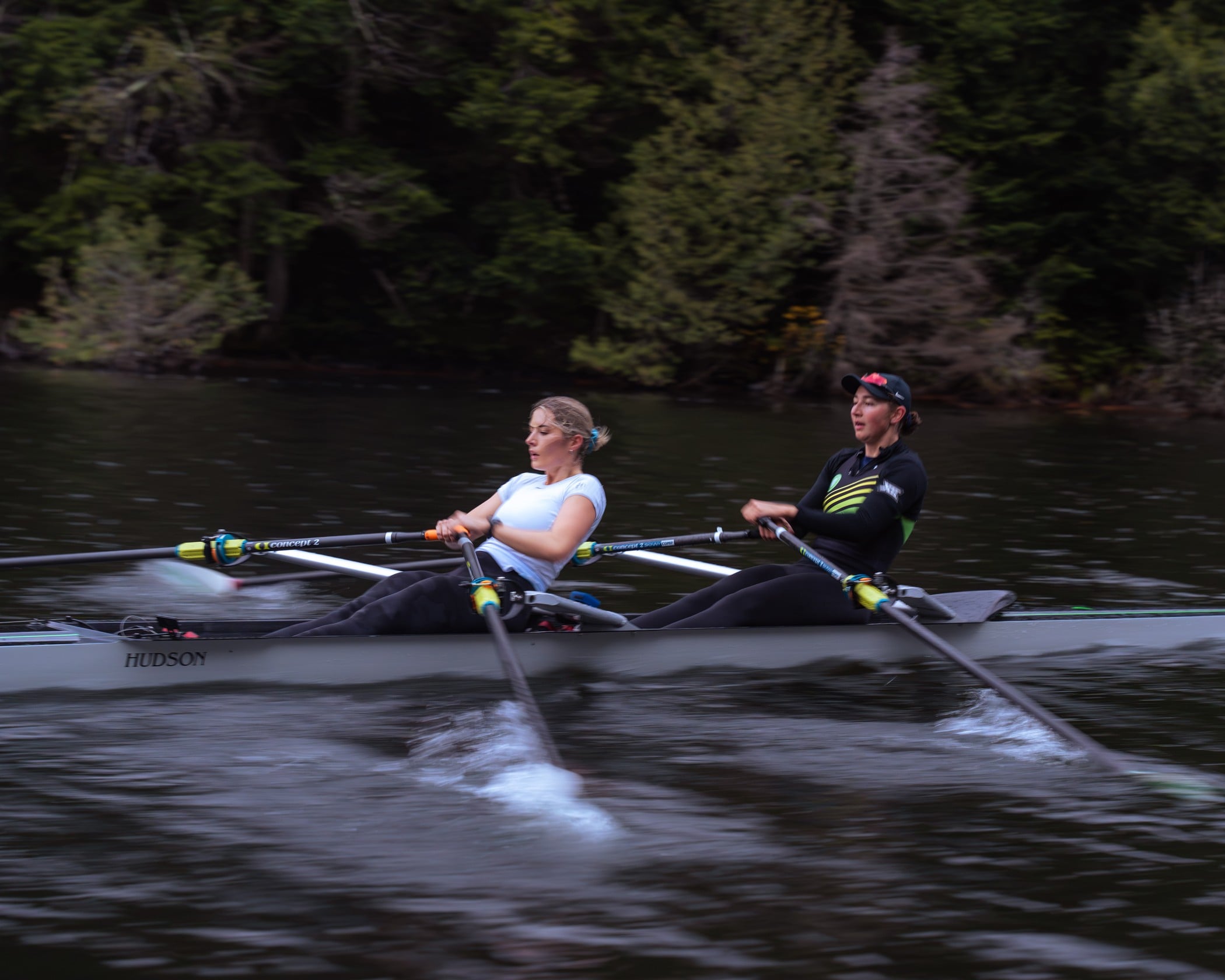
The study also introduced a new way of measuring where force is applied on the blade, revealing that the centre of pressure sits further inboard than previously assumed, and varies between blade types. This shifts the effective gearing of the oar, making it around 7–8% heavier than traditional calculations would suggest. It’s a reminder that blade performance isn’t just about visible geometry and has significant implications for rigging and blade selection.
Taken together, these findings suggest that there is no single “best” blade, only the best balance for a given athlete. The Smoothie2 remains a dependable, well-rounded option, offering consistent performance across a range of conditions. The Fat2 provides maximum connection, while the Comp reflects a different philosophy, prioritising overall effectiveness and energy efficiency. It is particularly effective at high stroke rates and higher boat speeds, which may help explain its increasing presence in elite competition.
For rowers and coaches, the message is straightforward. Blade selection shouldn’t be based on size alone. It should reflect how an athlete rows, how they apply power, and what allows them to move the boat most effectively over race distance.
Not all blade surface area contributes equally to propulsion, where that area is positioned matters just as much as how much there is. On more traditional hatchet designs, the inboard portion of the blade can create negative effects during the stroke, increasing drag rather than contributing to forward motion. By distributing area more deliberately and maintaining blade depth, designs like the Comp aim to maximize useful work in the water while minimizing these under-appreciated losses.
In many ways, this research highlights the direction Concept2 blade development has already been moving. The progression from larger to more refined designs reflect a deeper understanding of rowing as a complex interaction between athlete, equipment and water.
To explore the findings in more detail, you can read the full study here:
https://doi.org/10.1080/14763141.2026.2643775
References:
- Kleshnev, V. (2026) ‘Efficiency of various blade types in rowing’, Sports Biomechanics, pp. 1–11. doi: 10.1080/14763141.2026.2643775.
Recent Posts
Tags: